Skin Purging vs Breakouts: What Really Happens When You Switch to Natural Skincare

1 August 2026

You switch to a natural soap or a rich tallow moisturiser expecting your skin to feel calmer. Instead, within a week or two, you notice a few extra spots, some tightness, or skin that feels oilier than usual. The obvious explanation seems to be “purging” – the idea that your skin is releasing years of toxins as it adjusts. It is a comforting story, but it is not always the right one.

Understanding what is actually happening when your skin changes after switching products can save you from either giving up on a good product too early, or persisting with one that is genuinely not right for you. This guide explains the real difference between purging, breakouts, irritation and a normal adjustment period, using current dermatological understanding, and how that applies specifically to switching to a simpler, natural routine like Signature Botanicals.

What skin purging actually is

Skin purging is a real, well-documented phenomenon, but it has a specific cause. It happens when a product increases the speed of skin cell turnover, which pushes existing congestion that was already forming beneath the surface out more quickly than it would have appeared naturally. The result is a temporary flare of spots in your usual breakout areas, appearing sooner and clearing sooner than they otherwise would.

Crucially, true purging is linked to a specific category of ingredient: retinoids, chemical exfoliants such as AHAs and BHAs, and some acne treatments. These actives work by accelerating cell renewal. If a product does not do this, it cannot cause purging in the clinical sense, no matter how natural or synthetic it is.

Why this matters for natural skincare

Cold process soap, tallow moisturiser, clay masks and bath salts do not contain retinoids or chemical exfoliants. This means that, strictly speaking, they are not the kind of products that cause purging. If your skin changes after switching to a natural routine, something else is going on – and it is usually one of a few explainable, manageable things rather than a mysterious detox.

The four most likely explanations for “new product, new spots”

When people say their skin is “purging” after switching to natural skincare, it is worth working through the real possibilities in order. Each has a different cause, a different timeline, and a different response.

1. A genuine adjustment period

Sebaceous glands respond to whatever is regularly applied to the skin. If you move from a synthetic, detergent-based cleanser or a lightweight synthetic lotion to a richer, oil-based product, your skin's oil production can take a short period to recalibrate. Some people notice their skin feels temporarily oilier in the first one to two weeks of switching to a richer moisturiser, simply because the skin is adjusting to a different type of barrier support than it is used to.

This is not purging and it is not a breakout in the traditional sense. It tends to settle on its own within two to four weeks, and it responds well to consistency rather than switching products again straight away.

2. New ingredients causing irritation, not toxins leaving

Natural does not mean risk-free. Essential oils, in particular, are concentrated botanical extracts, and it is entirely possible to have a mild sensitivity or irritation reaction to one you have not used before. This can look similar to a breakout, but the underlying cause is contact irritation, not clogged pores clearing out.

Irritation typically shows up wherever the product was applied, rather than only in your usual congestion-prone areas, and it often comes with tightness, redness or a mild stinging sensation rather than typical whitehead or blackhead formation.

3. Mechanical exfoliation from clay

Clay masks work differently to chemical exfoliants, but they do have a genuine, gentle clearing effect. Clay draws out excess oil and surface impurities as it dries, which can occasionally bring a few small blemishes to a head faster than they would have appeared alone, particularly the first few times you use one. This is closer to true purging than anything else on this list, but it is limited to the areas you applied the mask, and it should be mild and short-lived.

4. A genuine breakout, unrelated to the switch

Sometimes the timing is simply a coincidence. Hormonal cycles, diet, stress, weather changes, and even a different pillowcase can all cause breakouts around the same time as a routine change, without the new product being the cause at all. This is worth remembering before assuming a new soap or moisturiser is responsible for something that may have happened anyway.

How to tell the difference: a practical checklist

Because the underlying causes are different, it helps to look at the pattern of what is happening rather than just the fact that something changed. Ask yourself these questions.

Where is it happening?

Purging and true breakouts tend to appear in your usual problem areas. Irritation tends to appear specifically where you applied the new product, and can include areas that do not normally break out at all.

How long has it been going on?

A genuine adjustment period or mild clay-related clearing should meaningfully improve within two to four weeks. If things are getting worse rather than better after four to six weeks, it is unlikely to be an adjustment phase, and it is worth reconsidering the product or frequency of use.

What does it feel like?

Tightness, stinging, redness or a burning sensation point towards irritation. Oiliness without inflammation points towards a sebum adjustment. Typical spots with no unusual sensation are more consistent with normal breakout patterns that may or may not be related to the switch.

Is it spreading to new areas?

Purging and adjustment periods stay contained to expected areas. If a reaction is spreading, worsening, or accompanied by swelling, it is a sign to stop using the product and, if it does not settle quickly, to speak to a pharmacist or GP.

How to switch to a natural routine without unnecessary setbacks

You do not need to overhaul your entire bathroom shelf overnight. A slower, more deliberate transition makes it far easier to tell what is actually happening if your skin does change.

Introduce one product at a time

If you switch your soap, moisturiser and mask all in the same week, it becomes very difficult to identify the cause of any change. Start with one product, ideally the one you use least often on your face if you are cautious, and give it two to three weeks before introducing the next.

Patch test new essential oil blends

Before applying a new product to your face, apply a small amount to your inner forearm and wait 24 to 48 hours. This is especially worthwhile if you have reactive skin or you are trying a scent blend you have not used before, such as a new bath salt or lip balm fragrance.

Use richer products sparingly at first

With a nourishing, tallow-based moisturiser, a little goes further than you might expect. Applying a thick layer on day one is more likely to feel heavy and can make it harder to judge how your skin is genuinely responding. Start with a small, pea-sized amount and build up only if your skin wants more.

Keep clay mask use to the recommended frequency

Once or twice a week is enough for most people. Using a clay mask daily in an effort to “speed up” results is more likely to cause dryness and irritation than to help.

Give it a fair trial before switching again

Because a genuine adjustment period can last two to four weeks, changing products again after only a few days rarely gives you an accurate picture. If nothing is worsening and there is no irritation, it is usually worth continuing for the full adjustment window before deciding a product is not right for you.

When to stop and take a different approach

Most adjustment reactions are mild and temporary, but it is sensible to stop using a product and take stock if you notice persistent redness, swelling, itching that does not settle, or spots that are spreading well beyond where the product was applied. If symptoms are more than mild, or you are at all unsure, a pharmacist or GP is the right person to advise you, particularly if you are managing an existing skin condition such as eczema, rosacea or diagnosed acne.

Frequently asked questions

Is switching to natural soap or moisturiser likely to make my skin worse before it gets better?

For most people, no. A short adjustment period of slightly different oil balance is common and expected, but a genuine worsening of skin condition is not typical of switching to gentler, simpler formulas. If your skin is clearly deteriorating rather than settling, it is worth reviewing what changed and considering whether irritation, rather than adjustment, is the cause.

How long should I expect an adjustment period to last?

Most genuine adjustment effects settle within two to four weeks. If nothing has improved by six weeks, it is more likely to be irritation or an unrelated issue than a normal transition phase.

Can tallow moisturiser cause breakouts?

Tallow is not inherently comedogenic for most people, and its fatty acid profile is similar to the skin's own sebum. Some people do find certain rich, oil-based products do not suit their particular skin type, which is a matter of individual compatibility rather than a universal detox reaction. Introducing it gradually and in small amounts is the best way to judge how your skin responds.

Should I push through irritation, expecting it to be purging?

No. Because true purging is specifically linked to actives that increase cell turnover, most natural skincare products are not capable of causing it. If you are experiencing redness, stinging or spreading irritation, it is more sensible to stop and reassess than to continue in the hope it is a purge that will pass.

What is the safest way to try a full natural routine for the first time?

Introduce one product at a time, patch test anything with a new essential oil blend, use richer products sparingly to begin with, and give each addition a few weeks before adding the next. This makes it far easier to enjoy the switch without unnecessary guesswork.

A calmer way to switch

Moving to a simpler, natural routine should not feel like a leap of faith. Understanding what your skin is likely to do, and why, takes the guesswork out of the first few weeks and helps you judge honestly whether a product is right for you.

If you are ready to start, introducing one product at a time is the easiest way to build confidence. Many people begin with a cold process soap for daily cleansing, then add a tallow moisturising cream once they are comfortable, before introducing a weekly clay face mask or a bath salt ritual. If you are ever unsure how a product might suit your skin, the FAQ covers patch testing and ingredient guidance in more detail, and you can browse the full range to build your routine at your own pace.
6 June 2026
Most of us judge a skincare product by the front of the pack. The words are reassuring – “natural”, “clean”, “dermatologically tested”, “hypoallergenic” – and the design looks calm and trustworthy. But the front of a bottle is marketing. The real story is on the back, in the small print, in the ingredient list almost nobody reads. Learning to read that list is one of the most useful skincare skills you can develop. It takes a few minutes to understand, it costs nothing, and it puts you back in control of what goes onto your skin and into your home. This guide explains how cosmetic ingredient labels work in the UK, how to decode the names, and how to spot the ingredients many people now choose to avoid – including the endocrine-disrupting chemicals that inspired Signature Botanicals in the first place. Why the ingredient list matters more than the claims on the front In the UK, words like “natural”, “clean” and “botanical” are not legally defined or controlled on cosmetic packaging. A product can feature leaves and earthy tones on the label while still containing synthetic preservatives, artificial fragrance and petroleum-derived ingredients. That is not necessarily dishonest – it is simply how cosmetic marketing works. The ingredient list is different. By law, cosmetics sold in the UK must carry a full list of ingredients, and that list has to follow a standard naming system. Once you understand how to read it, the label stops being a wall of unfamiliar words and becomes a genuinely useful tool for comparing products and making your own decisions. What is an INCI list? The ingredient list on any cosmetic is written using INCI names. INCI stands for the International Nomenclature of Cosmetic Ingredients, a standardised naming system used across the UK, the EU and much of the world. It exists so that the same ingredient is always labelled the same way, no matter the brand or the country, which is why the names can look so technical. INCI names often use Latin for botanical ingredients and chemical names for everything else. So sweet almond oil appears as Prunus Amygdalus Dulcis Oil, water appears as Aqua, and shea butter appears as Butyrospermum Parkii Butter. Once you know this, a “scary” sounding label is sometimes just a list of perfectly gentle, natural ingredients written in their formal form. Ingredients are listed in order of quantity This is the single most useful rule to remember. Ingredients are listed in descending order, from the largest amount to the smallest. The first few ingredients make up the bulk of the product, while those near the end are present in much smaller amounts. Ingredients used at concentrations below one per cent can be listed in any order at the end of the list. This rule quietly reveals a lot. If a product is sold on its “rosehip oil” or “vitamin C” hero ingredient, but that ingredient appears right at the bottom of the list, it is only present in a trace amount. What you are mostly buying is whatever sits at the top. Fragrance is the exception to the rule There is one important gap in the system. Fragrance can be listed simply as Parfum (or Fragrance), and brands are not required to break down what that single word contains. A fragrance blend can be made up of dozens of individual chemicals, and the label does not have to tell you which ones. This matters because, as we will see, certain ingredients people prefer to avoid can sit hidden inside that one word. The ingredients people most often want to understand You do not need a chemistry degree to read a label, but it helps to recognise a handful of ingredient families that come up again and again in conversations about safer skincare. Here is a measured, evidence-based look at the most common ones – without turning it into a scare story. Parabens Parabens are a group of preservatives used to stop bacteria and mould growing in water-based cosmetics. On a label they are easy to spot because the name ends in -paraben, such as methylparaben, propylparaben or butylparaben. They are effective and inexpensive, which is why they have been so widely used. They are also one of the most studied ingredients in the “hormone disruptor” conversation. Some parabens have been shown to exhibit weak oestrogen-like activity, and research into their effects on the body is ongoing. Regulators consider certain parabens safe within strict concentration limits, but many people prefer to avoid them entirely while the science continues to develop – which is a reasonable, precautionary choice. Phthalates and the word “parfum” Phthalates are a group of chemicals used in cosmetics to make fragrances last longer and to add flexibility to certain formulas. They are the clearest example of why the fragrance loophole matters: phthalates are often part of a scent blend, so they can be present without ever being named individually – they simply sit inside Parfum on the label. Like parabens, some phthalates have been linked in research to hormone disruption, and several have been restricted or banned in cosmetics in various regions. If you want to avoid them, the most practical approach is to choose products that are scented with named essential oils rather than an unspecified Parfum, or that openly state they are free from synthetic fragrance. Other names worth recognising A few other ingredients come up often enough to be worth knowing. Petrolatum and Paraffinum Liquidum are petroleum-derived ingredients common in lip balms and ointments; they sit on the skin to seal in moisture but do not nourish it. PEG compounds (followed by a number) are synthetic processing ingredients. Formaldehyde-releasing preservatives, such as DMDM hydantoin, are another group some people choose to avoid. None of these tells you a product is “bad” – but recognising them lets you decide what fits your own standards. What are endocrine-disrupting chemicals (EDCs)? Several of the ingredients above belong to a broader category called endocrine-disrupting chemicals, or EDCs. The endocrine system is the network of glands and hormones that regulates things like growth, metabolism, mood and reproduction. An endocrine disruptor is a substance that can interfere with how those hormones work – even at low doses, in some cases. EDCs are not unique to cosmetics. They turn up in plastics, food packaging and household products too, which is part of why exposure adds up across daily life. In skincare specifically, the EDCs most often discussed are certain parabens, phthalates, some synthetic fragrance components and a handful of UV filters. The research is still evolving, and regulators continue to review the evidence, but for many people the sensible response is simple: where there is a clean, effective alternative, why not choose it? This is exactly the question that led to Signature Botanicals. The brand began with one concern – what hidden chemicals are we bringing into our homes and onto our skin? – and built its entire range as an answer to it. A simple five-step method for reading any label You can apply this to any product in your bathroom, not just skincare. The aim is not to memorise hundreds of chemical names, but to build a quick, repeatable habit. Step one: ignore the front, turn to the back. Treat the marketing claims as a starting point only, and go straight to the ingredient list to check whether they hold up. Step two: read the top three ingredients. These make up most of the product. If the headline ingredient is not near the top, it is probably present in name more than in substance. Step three: scan for the families you now recognise. Look for anything ending in -paraben, the word Parfum or Fragrance, and petroleum-derived names. Decide whether those fit your personal standards. Step four: check how it is scented. Named essential oils (for example Citrus Sinensis for sweet orange, or Lavandula Angustifolia for lavender) tell you exactly what you are getting. An unspecified Parfum does not. Step five: when in doubt, choose simpler. A short list of recognisable ingredients is easier to understand, easier to patch test, and easier to trust than a long list of unfamiliar ones. What Signature Botanicals chooses instead Signature Botanicals was created specifically so that you do not have to decode a worrying ingredient list in the first place. Everything is handcrafted in small batches in Wales, using natural ingredients and organic ones wherever possible, and deliberately made without synthetic additives, seed oils or hidden nasties. That means scent comes from essential oils rather than an unnamed Parfum, so you always know what is creating the fragrance. The tallow moisturising cream relies on a traditional, nutrient-rich fat instead of synthetic fillers. The lip balms are built from beeswax, shea and coconut butter rather than petroleum. The cold process soaps keep their naturally produced glycerin instead of relying on synthetic detergents, and the bath salts and clay face masks use minerals, clays and botanicals you can actually recognise. In other words, the labels are designed to be readable. If you would like to understand the brand's wider thinking on ingredients, the FAQ explains the approach in more detail, and the post on seed oil free skincare covers one specific ingredient choice in depth. Frequently asked questions Does “natural” on a label mean anything in the UK? Not on its own. “Natural”, “clean” and similar terms are not legally defined for general cosmetic marketing, so they are only as meaningful as the ingredient list behind them. Always check the back of the pack to see whether the claim is supported. How can I tell if a product contains hidden fragrance chemicals? Look for the word Parfum or Fragrance in the ingredient list. Because brands do not have to break down what that blend contains, it can hide ingredients such as phthalates. Products scented with named essential oils are more transparent about exactly what you are applying. Are parabens and phthalates banned? Some specific phthalates and parabens have been restricted or banned in cosmetics, while others remain permitted within set limits, and the rules can differ between the UK and the EU. Because the science is still developing, many people take a precautionary approach and choose products that avoid them altogether. Do natural ingredients ever cause reactions? Yes. Natural does not automatically mean suitable for everyone, and essential oils in particular can cause sensitivity for some people. Patch testing a new product on a small area first is always sensible, especially if you have reactive skin or a diagnosed skin condition, in which case you should follow your clinician's guidance. Where do I start if I want to simplify my routine? Begin with one product category and one swap at a time so you can see how your skin responds. Many people start with a daily product like soap or a moisturiser, then build from there. You can explore the full Signature Botanicals range and choose what fits your routine.  The label is the truth – learn to read it Reading an ingredient list is not about fear, and it is not about declaring any single ingredient evil. It is about transparency. When you understand how INCI names work, how ingredients are ordered, and which families to look out for, you can see past the marketing and make calm, informed choices for yourself and your home. That is the whole idea behind Signature Botanicals: skincare that is simple, honest and effective, with nothing to hide in the small print. If you are ready to build a cleaner routine around ingredients you can actually recognise, browse the full collection and start with whatever your skin needs most.
8 May 2026
Seed Oil Free Skincare: What It Means, Why Some People Avoid Seed Oils, and What Signature Botanicals Uses Instead If you have been searching for seed oil free skincare in the UK , you are probably aiming for a simpler routine with ingredients that feel predictable on your skin and stable in the jar. Signature Botanicals takes a clear stance here. The FAQ states that none of their products contain seed oils, and explains the reasoning as stability and oxidation, with a preference for traditional, nourishing ingredients like tallow, unrefined oils, butters, clays, and botanicals. This guide explains what seed oils are, why some people choose to avoid them in skincare, and how to build a routine around the Signature Botanicals approach. Quick answer: what does seed oil free skincare mean? Seed oil free skincare simply means the product does not include oils derived from seeds such as sunflower, grapeseed, rapeseed, soybean, or similar. Signature Botanicals confirms this directly in its FAQ: “Nope, none of our products contain seed oils.” What are seed oils in skincare? Seed oils are plant oils extracted from seeds. They are widely used in skincare because they can feel light, spread easily, and support certain textures. Many seed oils are higher in polyunsaturated fatty acids, which matters for product stability because polyunsaturated fats generally oxidise more readily than more saturated fats. Oxidation can affect odour and quality over time, which is a recognised issue in cosmetic formulation. Why do some people avoid seed oils in skincare? People choose seed oil free skincare for different reasons. These are the most common and practical ones, without turning it into a scare story. 1. Preference for more stable oils in everyday products Some seed oils can be more prone to oxidation depending on their fatty acid profile and storage conditions. Research into rapeseed oils, for example, shows differences in oxidative stability linked to fatty acid composition. In cosmetics, oxidation is widely recognised as something that can influence product quality and contribute to unwanted odours. Signature Botanicals mirrors this thinking. Their FAQ says seed oils can be unstable and prone to oxidation, and that they prefer stable, nutrient rich, skin compatible oils instead. 2. Simpler ingredient lists and fewer variables Many people looking for seed oil free skincare are also trying to simplify. Fewer ingredients can make it easier to understand what is working for your skin and what is not. Signature Botanicals frames its range around natural, simple ingredients and advises patch testing because everyone’s skin is different. 3. A traditional approach to nourishment Signature Botanicals leans into traditional ingredients like tallow and butters, plus clays and botanicals. This is part of their wider positioning across the shop categories. Their FAQ also explains why they use tallow, describing it as rich in vitamins A, D, E, and K, with a fatty acid profile similar to the skin’s sebum, making it deeply nourishing and absorbable. What does Signature Botanicals use instead of seed oils? Based on the FAQ, Signature Botanicals builds formulas using: Tallow Unrefined oils and butters Clays and botanicals Essential oils rather than artificial fragrance This shows up across the product categories, including soaps, moisturising creams, bath salts, lip balms, and face masks. How to build a seed oil free routine with Signature Botanicals If you want a simple routine that supports the seed oil free approach, start with these building blocks. Step 1: Cleanse with cold process soap The FAQ explains cold process soapmaking and why it can be gentler than many commercial detergent based bars, because it retains naturally produced glycerin. Explore the soaps collection here. Step 2: Add a weekly deep cleanse with a clay mask Signature Botanicals explains that clay masks draw out impurities, absorb excess oil, and gently exfoliate. They recommend using the mask 1 to 2 times per week and not letting it fully crack and dry. Step 3: Nourish with a moisturising cream The moisturising creams category currently features Tallow Moisturising Cream. If you are new to tallow, the FAQ suggests it melts into skin and a little goes a long way. Step 4: Support lips with a simple balm The lip balm FAQ states no petroleum, no synthetic flavours, and a focus on oils, butters, and waxes that hydrate and protect. Step 5: Add bath salts for a simple wellbeing ritual Bath salts are described as mineral rich salts and botanicals that help relax muscles and soften skin, with the option to use them as a foot soak if you do not have a bath. Are seed oils bad in skincare? Some people love seed oils in skincare and do well with them. The choice to go seed oil free is usually about personal preference, skin response, and product philosophy. Signature Botanicals chooses to avoid seed oils due to stability and oxidation concerns and prefers traditional, stable ingredients instead. Why does oxidation matter in skincare? Oxidation can contribute to changes in product quality and odour over time. In cosmetic ingredients, oxidation is widely recognised as something formulators work to manage, especially with more polyunsaturated oils. How do I know if a product contains seed oils? Check the ingredient list for names like sunflower, grapeseed, rapeseed, canola, soybean, safflower, or similar. If you want to avoid them completely, choose a brand that states a seed oil free approach clearly, as Signature Botanicals does in its FAQ. Shop seed oil free skincare from Signature Botanicals If you want a routine built around traditional ingredients and a clearly stated seed oil free approach, explore the Signature Botanicals categories: Soaps Moisturising Creams Face Masks Lip Balms Bath Salts
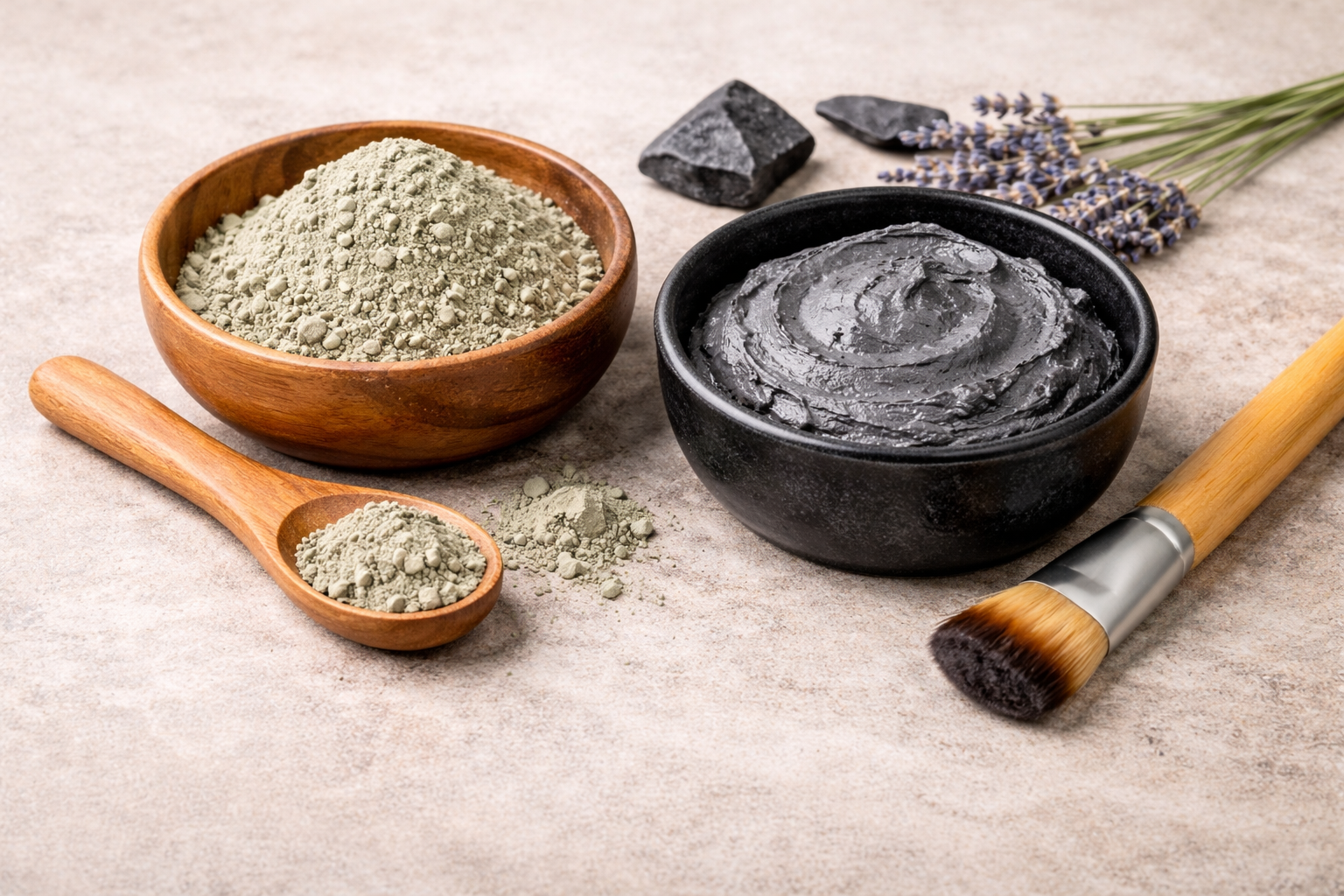
A bowl of green powder, a bowl of grey face mask, a wooden spoon, a brush, and lavender on a neutral stone surface.
2 April 2026
A summary of best practice when using clay face masks